


|
My blog discusses the important and complex subjects of college completion, college success, student risk factors (for failing), college readiness, and academic preparation. I will explore the pieces of the college puzzle that heavily influence, if not determine, college success rates.
College Data on Student Preparation and Success Is Getting Worse
Dennis Jones of the National Center for Higher Education Management Systems wrote this analysis of college data weaknesses as part of the report Measuring Up: 2008 by the National Center for Higher Education and Public Policy
The Information Gap: Much Talk, Little Progress By Dennis P. Jones Over the past decade, states have used Measuring Up to evaluate and compare their performance in higher education. Policymakers and the public have tracked their state's progress and setbacks in preparing students for education beyond high school, enrolling them in college, trying to keep college affordable, and conferring degrees. During this time, one trend has held constant: not all the information needed by policymakers is available to them. When first published in 2000, Measuring Up identified the key areas where comparative, objective information was not available across states. Most of the deficiencies noted at that time persist today (see table). In fact, in many areas there is less information available now. In some cases, states have not participated in national assessments that would have provided important state-level data; in other cases, national groups have not collected sufficient data from each of the states. The result is a failing grade-an F-for the nation's performance in developing data resources for state-by-state comparisons in higher education. Preparation There has been some improvement in assessing how well states prepare students for college. The Census Bureau's new American Communities Survey (ACS) now provides more timely and accurate data about high school completion. However, this improvement does not affect two important areas: advanced course taking and student achievement. Advanced K-12 Course Taking. Enrollment levels in advanced courses can help to indicate preparedness for college. Since 2000, substantially fewer states participate in national surveys that indicate how many eighth graders take algebra and how many high school students enroll in advanced math and science. Student Achievement in the 12th Grade. Most states-but not all-continue to participate in the National Assessment of Educational Progress (NAEP) for eighth graders. For high school seniors, there is a comparable national assessment but it does not provide data at the state level. Information about the "stock of learning" that students acquire in high school and carry into college continues to be missing in the states. Participation There has been no progress in assessing the extent to which states provide opportunities for residents to enroll in higher education. College Enrollment Rates for Recent High School Graduates, by Income. At the national level, rates of college enrollment are available by racial group and by income. At the state level, these rates are available by racial group, but not by income. Data about student financial aid packages for college freshmen have improved, but nothing is known at the state level about the family incomes of students who do not apply for (or receive) such aid. Given the changing demographics of college students, information about the family incomes of college-eligible individuals and those who actually enroll is crucial for effective state policymaking. Its absence represents one of the most notable of all the information gaps. Migration of Students Across States. Information about the state of origin of college freshmen continues to be available. As a result, state-to-state migration of entering students can be determined. Once students enroll, however, federal data collection does not offer a way to track their progress or geographic location. The National Student Clearinghouse (NSC) could be used for this purpose if the protocols for use could be agreed upon nationally. Matching records from multiple state-level record systems has proven possible but arduous. At a time when workforce development is particularly important to state policymakers, the inability to assess migration patterns beyond the freshman year represents a severe handicap. Affordability There has been some progress in tracking the affordability of higher education for students and families, but this progress has not gone nearly far enough. Unmet Financial Need for Eligible and Qualified Students. The available data estimate unmet financial need on a national basis, but not at the state level. As a consequence, there is still no state-by-state assessment of the extent to which financial factors affect college participation. Distribution of Student Aid. Since 2000, some progress has been made in calculating financial aid patterns, though the improvements are far from adequate. Data on the amounts of different kinds of aid distributed to freshmen is now available by campus. Still missing, however, are data about the economic circumstances of aid recipients and the extent to which aid packages change as students advance in their college careers. For example, do loans supplant grants after the freshman year in some states more than others? An oversample of 12 states by the National Postsecondary Student Aid Survey in 2004 provided this kind of in-depth information. Until this information is available for all 50 states, however, policymakers will not be able to have a clear picture of college affordability. Undergraduate Student Loans. In 2000, data about borrowing by graduate and undergraduate students were combined, making it impossible to determine levels of undergraduate borrowing. This problem has been remedied-one of the few areas of clear progress. Completion Problems remain in assessing whether students are completing their educational programs in a timely manner. Progression of Individual Students Across Systems and States. Since many students transfer among colleges, it is important to track students across institutions. Many states have data systems that allow such tracking across public institutions in-state, but not across state lines. Data from the National Student Clearinghouse have been analyzed through a pilot effort. While this resource has limitations, it has proven capable of yielding good information for most states. Not all institutions participate, although a majority in most states do. Key data elements have not been available, such as whether a student is enrolled for the first time in college. Since protocols have not been agreed upon nationally to continue the pilot analysis, it must be concluded that no lasting progress has been made in this area. Degree Completion in Six and Ten Years. Unlike in 2000, all institutions of higher education now report information on the proportion of full-time, first-time students who complete their programs within 150% of program length (six years for bachelor's degrees). Completion rates are also provided for students after four and five years. This is clearly an improvement, but there are still major shortcomings. Six years is too short a time period for many students, particularly working adults. The data cannot track students who transfer between institutions, both in-state and out-of-state. And the data are particularly flawed for community colleges because they fail to account for students who start part-time (the majority of enrollments at many community colleges) and students who transfer to four-year institutions. This is an area where most of the data are available in many states, but not in a way that allows national comparisons. In sum, progress has been made but remains inadequate. Benefits There has been some improvement in tracking the benefits that accrue to states as a result of having an educated population. Educational Attainment. Two improvements have occurred in assessing whether state residents have a bachelor's degree. First, the U.S. Census Bureau's American Community Survey (ACS) now provides much more accurate data about the educational attainment of adults. Secondly, it is now possible to calculate the percentage of college degree holders who were born in the state in which they are living. This provides a basis for comparing states in developing home-grown talent. Civic Engagement. New information about volunteerism is now available, including comparisons of volunteerism for college graduates and for those without college degrees. Although these data have rather large sampling errors at the state level, some progress has been made. Learning As in 2000, there are still no common benchmarks that would permit state comparisons of the knowledge and skills of college students. There are isolated instances in which learning outcomes are assessed, such as South Dakota's mandatory exam of rising college juniors. There are assessments that cover portions of the population, such as Graduate Record Examinations (GREs), which test those pursuing graduate study. And there are assessments in selected fields, such as licensure exams in nursing or WorkKeys in selected vocational fields. But there is no nationwide approach to assessing learning that would allow state-to-state comparisons. What energy was available for state assessments in 2000 has been directed to campus-level assessments in 2008, such as the Voluntary System of Accountability. This represents a step backward, not forward. Adult Skill Levels. In assessing adult skills in the states, there has also been a large step backward. In 1992, the National Assessment of Adult Literacy (NAAL) provided a sufficient survey base to estimate the mastery of higher-level skills among the adult populations of most states. That assessment was re-administered in 2003. In 1992, 13 states participated in an oversample; in 2003, only six states did so. And almost five years later, the data have not been released for secondary analysis. National results indicate lower literacy levels for adults in 2003, but data are unavailable for all but a limited number of states. If states are to improve workforce preparedness, it is crucial that policymakers have access to information about the skill levels of state residents. Cost Effectiveness Over the past decade, there has been little progress in assessing state performance in higher education relative to the resources committed to the endeavor. An approach to calculating cost effectiveness was developed by the National Center for Higher Education Management Systems (NCHEMS). However, until learning outcomes are available by state, calculating the cost effectiveness of higher education will continue to rely on proxy measures that leave much to be desired. Conclusion State leaders and the public need access to objective information to assess and improve higher education. No single entity is at fault for the absence of information about one of the most critical problems facing the nation today; there is plenty of blame to go around. In some areas the states-in others the nation-must provide leadership in developing the data resources for state-by-state analysis. It is time for every state-and the nation-to commit to getting the information needed to advance the educational attainment of the citizenry, and to halt the worrisome slide of the United States vis-à-vis other developed nations in this area. http://measuringup2008.highereducation.org/commentary/jones.p Labels: academic preparation, College Completion, data systems
posted by The College Puzzle at 1/24/2009
0 comments
|
|
My blog discusses the important and complex subjects of college completion, college success, student risk factors (for failing), college readiness, and academic preparation. I will explore the pieces of the college puzzle that heavily influence, if not determine, college success rates.
Performance in Middle Grades Strong Predictor Of College Success
A 2008 ACT report, "The Forgotten Middle" (www.act.org) finds that under current conditions the level of achievement that students attain by eight grade has a larger impact on their college and career readiness by the time they graduated from high school than anything that happens academically in high school. This includes family background, high school course work , and high school grade point average. ACT uses its 8th grade explore test for grade 8 and follows up with its grade 10 and 11 tests. Students who fall off the college prep track in middle school have a hard time recovering, but there are some student behaviors in high school that ACt finds can help.
I am part of a team doing a large scale survey of middle schools in California. More on this study in next blog, but our inital finding is how shallow the research base is on middle grades. Researchers have much more work completed on elementary and high schools, but there is no educational reason for this. Labels: academic preparation, College Success Studies
posted by The College Puzzle at 1/09/2009
0 comments
|
|
My blog discusses the important and complex subjects of college completion, college success, student risk factors (for failing), college readiness, and academic preparation. I will explore the pieces of the college puzzle that heavily influence, if not determine, college success rates.
Measuring Up Report Charts New Directions For College Preparation and Completion
The 2008 National Report Card: Modest Improvements, Persistent Disparities, Eroding Global Competitiveness
By Patrick M. Callan President, The National Center For Higher Education and Public Policy, San Jose, Ca. Measuring Up 2008 is the most recent in the series of national and state-by-state report cards for higher education that was inaugurated in 2000. The key findings this year reveal that the nation and most of the 50 states are making some advances in preparing students for college and providing them with access to higher education. However, other nations are advancing more quickly than the United States; we continue to slip behind other countries in improving college opportunities for our residents. In addition, large disparities in higher education performance by race/ethnicity, by income, and by state limit our nation’s ability to advance the educational attainment of our workforce and citizenry—and thereby remain competitive globally. College Preparation Young Americans who graduate from high school on time are now more likely to take courses that prepare them for college and to enroll in college, compared with earlier this decade or in the 1990s. But far too many graduates leave high school unprepared to succeed in college-level courses and need remediation when they enroll. In addition, larger proportions than in the past fail to graduate from high school; some eventually receive alternative high school certification, principally the GED, but they do not enroll in college in large numbers. The reduced high school graduation rate decreases the pool of potential college graduates and college-educated workers. Access to College The likelihood that a high school freshman will enroll in college by age 19 has improved modestly in this decade, from 39% to 42%, and the proportion of 18- to 24-year-olds enrolled in college has grown even more modestly. Meanwhile, the enrollment of working-age adults in college-level education or training has been declining since the early 1990s. Overall, the Measuring Up indicators show that access to college is fairly flat in the United States, with mostly small improvements in some states and declines in others. College Graduation For students who enroll in college, rates of completion of certificate, associate, and baccalaureate programs are poor and have improved only slightly. These low college completion rates—as with the declining rates of high school completion—are depriving the nation of college-educated and trained workers needed to keep the American workforce competitive globally. International Comparisons The United States’ world leadership in college access has eroded steadily, as reflected in the international comparisons of the proportion of 18- to 24-year-olds enrolled in college (see Figure 1). In college completion, which has never been a strength of American higher education, the U.S. ranks 15th among 29 countries compared (see Figure 2). The U.S. adult population ages 35 and older still ranks among the world leaders in the percentage who have college degrees—reflecting the educational progress of earlier times (see Figure 3). Among 25- to 34-year-olds, however, the U.S. population has slipped to 10th in the percentage who have an associate degree or higher (see Figure 4). This relative erosion of our national “educational capital” reflects the lack of significant improvement in the rates of college participation and completion in recent years. These cross-national comparisons place the nation’s higher education performance in a global context and reflect the gaps that have opened between the United States and other nations. These disparities undermine our national value of individual opportunity and our collective capacity to succeed in the knowledge-based global economy. Addressing these disparities is critical because: Education and training beyond high school is a prerequisite for employment that supports a middle-class life. This is a reality for most Americans. Seventy-eight million Americans are reaching or approaching retirement age, and this is the best-educated generation in the United States—both currently and historically. As the nation’s demography changes, large proportions of the younger generations are among those who are least well-served by the U.S. system of education currently: those whose educational opportunity and attainment reflect the disadvantages of race, income, and geography. Persistent Disparities To make significant headway in increasing the educational attainment of its population and thereby its comparative standing internationally, the United States must address disparities in educational opportunity and achievement among Americans. These persistent gaps must be closed if the United States is to meet its workforce needs and compete globally. First, the high school graduation rate (the percentage of ninth graders who complete a standard high school diploma in four years) has decreased for all racial and ethnic groups over the past three decades, and differences between racial and ethnic groups persist. By the middle of this decade: the national on-time high school graduation rate was 77.5%, the rate for African Americans was 69.1%, and the rate for Hispanics was 72.3%.1 Meanwhile, a growing number of high school students are taking longer to complete or are leaving high school without a standard diploma; some who drop out earn GEDs but are less likely to enroll in any form of postsecondary education and those who do enroll are less likely to complete a certificate or degree. In addition, disparities in college access are closely linked to race/ethnicity and income. While college attendance has increased for all groups over the past three decades, gaps in enrollment among racial/ethnic groups have not diminished. For high school graduates, 73% of whites, 56% of blacks, and 58% of Hispanics enroll in college the next fall.2 In terms of family income, 91% of high school students from families in the highest income group (family income of $100,001 or more) enroll in college. The enrollment rate for students from middle-income families (family income between $50,001 to $100,000) is 78% and for those in the lowest income group (family income between $0 and $20,000) the rate is 52%.3 The racial and ethnic disparities that exist in preparation for and access to college are also found in college completion rates. For example, 59% of white students complete a bachelor’s degree within six years of enrolling in college. In contrast, 47% of Hispanic students, 41% of African Americans, and 39% of Native American students complete a bachelor’s degree within six years. Finally, the state-by-state variation in educational performance represents another source of disparity and inequity for Americans. As reflected in the Measuring Up state report cards and grades, the likelihood of graduating from high school prepared for higher education, enrolling in college, and graduating from an affordable college or university differs enormously by state of residence. Here are some examples: High school freshmen in California, compared with their peers in Massachusetts, are 17% less likely to enroll in college by age 19. High school freshmen in Pennsylvania are 12% less likely to enroll than those in South Carolina or Utah. Half of young adults (ages 18 to 24) are enrolled in college in Rhode Island, while only 18% are in Alaska. Young adults are 15% more likely to be enrolled in college in Iowa than in Georgia, and 11% more likely to be enrolled in Massachusetts than in Texas. Given our relative decline internationally and the gaps in higher education performance within our borders, no state can afford to maintain the status quo. As Measuring Up 2008 reveals, even the best-performing states have gaps in performance they need to—and can—address. Narrowing those gaps will improve educational and economic opportunity in those states and for the nation as a whole. Dimensions of the National Deterioration of College Affordability The deterioration of college affordability throughout the United States has contributed to the disparities in higher education opportunity and attainment. There are several dimensions to this national and state problem. First, college tuition continues to outpace family income and the price of other necessities, such as medical care, food, and housing (see Figure 5). Whatever the causes of these tuition increases, the continuation of trends of the last quarter century would place higher education beyond the reach of most Americans and would greatly exacerbate the debt burdens of those who do enroll. Second, the erosion of college affordability has been exacerbated not only by increased tuition, but also by relatively flat or declining family incomes. As a result of these trends, the financial burden of paying for college costs has increased substantially, particularly for low- and middle-income families, even when scholarships and grants are taken into account (see Table 1). Third, students who do enroll in college are taking on more debt to maintain their college access. More students are borrowing (see Figure 6), and they are borrowing more. Over the last decade, student borrowing has more than doubled (see Figure 7). Another dimension of the problem of college affordability involves the financial aid priorities of colleges and universities, which are not in synch with public policy priorities. Currently, students from middle- and upper-income families receive larger grants from colleges and universities than students from low-income families receive (see Table 2). Conclusion Measuring Up 2008 identifies clearly the key areas of improvement and decline in higher education performance in the United States. States have made some modest advances, but these improvements are overshadowed by larger gains by other countries, and by the deterioration of college affordability throughout the United States. The relative erosion of our national “educational capital” has occurred at a time when we need more people to be college educated and trained because of Baby Boomer retirements and rising skill requirements for new and existing jobs. Meanwhile, states are grappling with substantial budget shortfalls. In this fiscal cycle, state leaders face a crucial choice in determining state policy for higher education. They can respond to their current budget crises in the usual patterns of the past, by allowing tuition and student aid policy to play second fiddle to institutional finance. States that select this course will most likely see precipitous tuition increases, cuts in student financial aid, and drops in college access. Further, if states take this path in being passive and complicit in allowing the brunt of the financial distress to be passed to students and families, then our national and state gaps in college access and completion will worsen, and college affordability will continue to deteriorate. But states have another option: to establish state policies for tuition and student aid that balance the financial burden for higher education among states, the institutions of higher education, and students and families. This is both a short- and long-term strategy that makes state policy more transparent, grounds it in the needs and financial circumstances of state residents, establishes college affordability as a priority, protects educational opportunity, and in the process helps to meet the needs of states and the nation for a well-educated workforce and citizenry. 1. James J. Heckman and Paul A. LaFontaine, “The American High School Graduation Rate: Trends and Levels,” Institute for the Study of Labor, IZA Discussion Paper Series, No. 3216 (December 2007). 2. National Center for Educational Statistics (NCES), “Education Longitudinal Study of 2002,” Digest of Education Statistics 2007 (Washington, D.C.: March 25, 2008). 3. NCES, “Education Longitudinal Study of 2002” (Washington, D.C.: October 2007), Table 6. Labels: academic preparation, College Completion
posted by The College Puzzle at 12/10/2008
0 comments
|
|
My blog discusses the important and complex subjects of college completion, college success, student risk factors (for failing), college readiness, and academic preparation. I will explore the pieces of the college puzzle that heavily influence, if not determine, college success rates.
Out of School Services Crucial To Student Success, But We Know Little About Interventions
Integrating outside community services
and better teaching could lead to success The on-going struggle to close the glaring gaps in student achievement remains an exercise in frustration. Where student performance is improving, the results are incremental. Where achievement remains low, educators and politicians, parents and students remain highly discouraged. So what’s to be done? Is there a better way to raise poor-performing k-12 students to higher levels? The answer, while promising, must be grounded in caution. While the No Child Left Behind law set standards for student achievement, it is clear that setting education standards alone will not solve the problem. Good schools offering good teaching of good courses in wholesome environments is a good starting point. Such schools tell students they can learn more and individual effort counts a lot. But for too many students, who come from neighborhoods with high concentration of poverty, poor health, insufficient nutrition, unstable homes and crime-ridden neighborhoods, outside forces beyond their control combine to frustrate if not defeat their attempts to get a good education. What is needed is an approach that improves systemic education reform and addresses children’s other needs simultaneously. It is not enough for state and school districts to adopt performance standards and enact standardized tests. Teachers must identify students’ strengths and weaknesses and adapt their teaching methods to address each student. Teachers must undergo effective professional development training to target efforts to each child’s learning difficulties. Fundamental to the success of any worthwhile enterprise is the intelligent allocation and deployment of resources sufficient to achieve the expected results. Too often, however, state and local school finance systems are disconnected from their standards-based reforms and a system of continual instructional improvement. It is one thing to require teachers and students to meet high standards in reading, math and science. It is quite another to provide them with all the tools (computers, text books, up-to-date teacher training and properly-equipped laboratories) so they can perform and meet such requirements. Moreover, if the best-paid, most experienced teachers are concentrated in the schools with high-performing students, and the least-experienced, lowest paid teachers are concentrated in the schools with low-performing students, odds are the low-performers will continue to perform below expectations. The point is many low-performing schools may require more resources and dramatically improved classroom instruction. Problems arise because a school district’s resources are not carefully distributed in ways to do the most good. Even if the policies and practices inside school districts and schools go well, outside influences can work to undermine their best efforts. This is most likely in areas where residents live in fear of crime, have weak parental support, and high unemployment. The hope may lie in connecting outside services for children and families to classroom instruction in a coordinated and interactive manner. This approach is a combination of community schools and school linked services, and is the basis for some cautious optimism for closing the student achievement gap. But we are just beginning to probe how to leverage out of school initiatives to improve school attainment. A period of intense experimentation is needed. For example, which family and children’s interventions are essential, and is a critical mass needed in different local contexts. One experiment to start with is to bring state and local social and health services into or near the schools. The purpose is to co-locate and to integrate services (such as tutoring, nutrition, counseling, medical and dental, adult education, childcare) so they serve to reinforce students and parents in enhancing education. For poor families especially, who often cannot travel to several locations to access various children’s services, combining them in one location at school or in adjacent facilities would be a major step-forward. For many, it may make the difference between seeing a doctor and dentist or not at all. It may mean the chance to have parents help their children with homework, get emergency child care, and afterschool education. Connecting public and non-profit services with schools will require federal, state and local cooperation in an unprecedented way—for all to often these activities operate independently in “silos”, separate and out of touch with one another. No less important will be for educators and teachers to be integrated into such services delivery. Teachers should know how family needs and strengths affect class performance, and be able to adapt their instruction accordingly. If the planning and set-up work for connecting outside services to schools requires some initial new funding, it would make sense to use existing program funds such as Medicaid, children’s protective services, in a new school-linked setting. This would eliminate the need to add, say social workers and nurses, to the school payroll. But all these added services will require more school staff to attract and integrate them within schools. Connecting outside services to schools would also require educators, service providers, political and civic leaders, to park their narrower institutional interests away, and adopt a spirit of collegiality and cooperation. Such a change will require a new definition of professions like education and social work that span several children’s services. The best way to begin connecting outside services to schools is on a trial basis. The federal and state governments could offer planning and start-up grants for districts and communities willing to organize and conduct experiments connecting outside services and communities to schools. Such experiments should be spread around in rural, urban and suburban settings. Various mixes of services and incentives should be tried ranging from the try it all approach of the Harlem Children’s Zone to paternalistic approaches that rely on improved behavior of children and education of parents. Closing the achievement gap will not accelerate or get much better if we continue doing the same things in the same way. A hungry child, a kid with bad teeth, youths with single parents struggling to make ends meet, or who are out of work or fighting addictions cannot be expected to perform as well in school as their counterparts from stable living, and good health and nutrition situations. If school financing were reframed into “children’s financing”, and family services across the spectrum were integrated at or near K-12 education, disadvantaged children would carry fewer handicaps to and inside their schools. This may become a “Rosetta Stone” that enables us to translate low achieving schools into more success. Michael W. Kirst is Professor Emeritus of Education at Stanford University. Prepared with support of the School Finance Redesign Project at the Center for Reinventing Public Education, University of Washington Labels: academic preparation, Student Success
posted by The College Puzzle at 11/17/2008
0 comments
|
|
My blog discusses the important and complex subjects of college completion, college success, student risk factors (for failing), college readiness, and academic preparation. I will explore the pieces of the college puzzle that heavily influence, if not determine, college success rates.
Slow Progress Toward Secondary School End of Course Exams
The Center on Education Policy published a report on end of course exams for high school graduation.Secondary courses are better aligned to end of course exams in algebra or world history than a cross cutting skills test. But only 4 states currently use end of course exams, and 11 may rely on them for graduation in 2015. Moreover, only a few states are thinking about how to link their end of course tests to college prepardness. Much more focus is needed on these issues, but I am not sure where the momentum will come from.see www.cep-dc.org
Labels: academic preparation, College Testing
posted by The College Puzzle at 11/07/2008
0 comments
|
|
My blog discusses the important and complex subjects of college completion, college success, student risk factors (for failing), college readiness, and academic preparation. I will explore the pieces of the college puzzle that heavily influence, if not determine, college success rates.
Historically Black Colleges Lack Resources in Maryland
The Baltimore Sun has published a report by the Maryland legislature that 4 year historically black colleges are underfunded and cannot provide sufficient student instruction and services. Science and tech labs are inadequate at Bowie ,Coppin, Morgan, and U Md- Eastern Shore. Graduation rates are 30% below Towson University. But SAT scores are also low at about 815. More money is needed for academic advising and remedial work.
Fewer than a third of black men who enter any 4 year college graduate within 6 years-see Chronicle of Higher Education-Oct 10, page A23.The Md report begins to explore some of the many reasons. Policy focus is on affirmative action in selective colleges, but the vast majority of black students attend broad access 4 year colleges. Labels: academic preparation, College Completion
posted by The College Puzzle at 11/04/2008
0 comments
|
|
My blog discusses the important and complex subjects of college completion, college success, student risk factors (for failing), college readiness, and academic preparation. I will explore the pieces of the college puzzle that heavily influence, if not determine, college success rates.
First year College Students Cannot Keep Up With Pace of Instruction
Last blog covered some aspects of this ,now some data from The High School Survey of Student Engagement- HSSSE in search engines. This is a national survey of 170,000 students grades 9-12.First year students in college spend more than twice as much time studying in college compared to their high school senior year. Half of college students spend more than 10 hours a week studying in their first year, but only 14% of high school seniors devote this much time to homework. 47% of the seniors spend three hours or less per week studying, but most get A's or B's in high school. Seniors write a few short papers and many skip math in the senior year.More on what to do about the senior year of high school in next blog, including ideas for senior seminars and reference courses based on introductory college courses.
Labels: academic preparation
posted by The College Puzzle at 10/29/2008
0 comments
|
|
My blog discusses the important and complex subjects of college completion, college success, student risk factors (for failing), college readiness, and academic preparation. I will explore the pieces of the college puzzle that heavily influence, if not determine, college success rates.
Pacing of College Courses Is Difficult For First Year Students
I just returned from a conference in Northwest Missouri on high school college prep. One message was that the pace of college courses is so different from high school, and freshman cannot keep up. 4 year broad access colleges cover in 30 days the math that high schools cover in 155 days of instruction. The homework hours are enormous difference in college, and the instructors do not go slowly through each chapter of the textbook. Pacing was more of a college transition problem than content alignment!
First year students expected to "do over" work they made mistakes with, and thought "extra credit" could raise their college grades. 4 year colleges do not do either of these. We need to get beyond vague phrases like college ready and alignment to a deeper understanding of college transition. Labels: academic preparation, College Readiness
posted by The College Puzzle at 10/28/2008
1 comments
|
|
My blog discusses the important and complex subjects of college completion, college success, student risk factors (for failing), college readiness, and academic preparation. I will explore the pieces of the college puzzle that heavily influence, if not determine, college success rates.
Testing and Academic Fitness for College Success
Madison, Wisconsin
>Academic Fitness > >Will Fitzhugh, The Concord Review > > > >The NACAC Testing Commission has just released >its report on the benefits of, and problems >with, current standardized admission tests. The >Commission says that "a 'one-size-fits-all' >approach for the use of standardized tests in >undergraduate admission does not reflect the >realities facing our nation's many and varied colleges and universities." > >It might be pointed out, by an outside observer, >that standardized tests not only do not reflect >the realities of acceptance for high school >students receiving athletic scholarships, but >such tests have nothing whatever to do with >whether high school athletes are recruited or >not and nothing to do with whether they receive >college athletic scholarships or not. > >Athletic scholarships are based on athletic >performance in particular athletic activities, >not on tests of the athletic or physical fitness >of high school athletes. The cost of failure for >college coaches is too high for them to think of >relying on any standardized test of sports >knowledge or of anything else in their efforts >to recruit the best high school athletes they can. > >The NACAC Testing Commission also says that >standardized tests may not do a good enough job >of telling whether applicants to college are >academically fit. They recommend the development >and use of good subject matter tests which are >"more closely linked to the high school curriculum" than the SAT and ACT exams. > >This suggestion begins to approach the rigor of >assessment in the recruiting and selection of >high school athletes, but there are still >important differences. The high school athletic >curriculum includes such subjects as football, >basketball, soccer, baseball, etc., but college >coaches do not rely on tests of athletes' >knowledge of these sports as determined by >sport-specific tests. They need to know a lot >about the actual performance of candidates in >those sports in which they have competed. > >The parallel is not perfect, because of course >students who can demonstrate knowledge of >history, biology, literature, math, chemistry, >and so on, are clearly more likely to manage the >demands of college history, biology, literature, >math and chemistry courses when they get there, >while athletes who know a lot about their sport may still perform poorly in it. > >But college academic work does not just consist >of taking courses and passing tests. In math >there are problem sets. In biology, chemistry, >etc., there is lab work to do. And in history >courses there are history books to read and >research papers to write. Such performance tasks >are not yet part of the recommended tests for college admission. > >It is now possible, for example, for a student >who can do well on a subject matter test in >history to graduate from high school without >ever having read a complete history book or >written a real history research paper in high >school. That student may indeed do well in >history courses in college, but it seems likely >that they will have a steep learning curve in >their mastery of the reading lists and paper >requirements they will face in those courses. > >New standard college admissions tests in >specific academic subjects will no doubt bring >more emphasis on academic knowledge for the high >school students who are preparing for them, but >a standard independent assessment of their >research papers would surely make it more likely >that they would not plan to enter college >without ever having done one in high school. > >The reading of complete nonfiction books is >still an unknown for college admissions >officers. Interviewers may ask what books >students have read, but there is no actual >standard expectation for the content, difficulty >and number of nonfiction books high school >students are expected to have read before college. > >The increased emphasis on subject matter tests >is surely a good step closer to the seriousness >routinely seen in the assessments for college >athletic scholarships, but it seems to me that >some regular examination of the reading of >nonfiction books and an external assessment of >at least one serious research paper by high >school students would help in their preparation >for college, as well as in the assessment of >their actual demonstrated academic fitness >which, as the Commission points out, is not now >provided by the SAT and ACT tests. > > > >"Teach by Example" >Will Fitzhugh [founder] >Consortium for Varsity Academics® [2007] >The Concord Review [1987] >Ralph Waldo Emerson Prizes [1995] >National Writing Board [1998] >TCR Institute [2002] >730 Boston Post Road, Suite 24 >Sudbury, Massachusetts 01776 USA >978-443-0022; 800-331-5007 > >Varsity Academics® > > > > Labels: academic preparation, College Testing
posted by The College Puzzle at 10/07/2008
0 comments
|
|
My blog discusses the important and complex subjects of college completion, college success, student risk factors (for failing), college readiness, and academic preparation. I will explore the pieces of the college puzzle that heavily influence, if not determine, college success rates.
Indiana's Policies Improve College Access and Success
SIGNIFICANT SHIFTS IN INDIANA POLICY PRIORITIES
>OVER TIME INCREASE STATE RESIDENTS' ABILITY TO ACCESS AND SUCCEED IN COLLEGE > >Study Reveals How Policymakers, Education >Officials, Interest Group Leaders Adopted >Bipartisan Policies to Improve Postsecondary >Opportunities for Hoosier Students > >Washington, D.C., September 17, 2008 When it >comes to improving access and success in higher >education to the benefit of the whole state, >Indiana is at the nation's forefront. This >achievement can be credited to bipartisan >efforts by key decision makers-policymakers, >business leaders, and education officials-who >continue to address some of the state's major >educational issues through a process of >evolutionary change that gave a seat at the >table to all interested parties. Due in large >part to those efforts, more than two-thirds (68 >percent) of Hoosier high school students >completed a college preparatory curriculum in >2006, compared with only 12 percent in 1994, and >more than 65,000 additional students have >enrolled in college in the state since 2001. > >According to a new report by the Institute for >Higher Education Policy (IHEP), Indiana has made >considerable progress in increasing college >access over the last several decades. The study, >Creating Change One Step at a Time: Efforts to >Improve College Access and Success in Indiana, >offers a glimpse at the interventions Indiana >has undertaken in the areas of academic >preparation, higher education affordability, and >a diversified system of higher education. > >EXAMPLES OF INDIANA'S INITIATIVES IN CREATING A COLLEGE-GOING CULTURE > * The Core 40 diploma-which requires > students to take four years of English, three > years of math through at least Algebra II, and > three years of science-was created to improve > academic preparation for high school graduates > and is now required for nearly all students. > * As a part of a commitment to provide > need-based grant aid, Indiana awards > approximately 86 percent of all undergraduate > student aid based on financial need alone > (rather than on academic merit or a combination > of need and merit), compared with a national average of 49 percent. > * The establishment of a statewide community > college system, Ivy Tech Community College of > Indiana, offers more affordable postsecondary > options, especially for working adults and for > underserved groups such as low-income and minority students. > >"By focusing its efforts on a clear policy >goal-increasing college access and >success-Indiana has been able to achieve a >series of significant postsecondary policy >changes that we hope will lead to a myriad of >successful outcomes," said IHEP President >Michelle Asha Cooper, Ph.D. "We applaud the >state and its efforts to aggressively push >through bureaucratic policy mazes to embrace >bipartisan amendments resulting in the creation >of a college-going culture among Hoosier residents." > >INDIANA'S KEY STEPS IN CREATING CHANGE The >report highlights several key practices that >have enabled Indiana to create substantial >changes in the educational policy arena. These include: > * Recognizing the need for change and > expressing that need to all stakeholders. > * Moving forward incrementally without > letting initial setbacks stop the process of change. > * Using data to inform policy decisions. The > work of experts inside and outside the state > can provide a range of options to address identified problems. > * Connecting to national organizations > working in the same areas. These connections > offer support in developing new policies and > links to other states that may have similar concerns or experiences. > * Seeking financial support for new policy > initiatives from nonprofit organizations, > foundations, and the federal government. > * Building public support through > transparency and aggressive communication efforts. > * Making sure all stakeholders have a seat > at the table so problems and policy solutions > can be thoroughly discussed before implementation. > * Cultivating strong, sustained, and > bipartisan state leadership. A few key > individuals can make or break policy initiatives. > >Despite its progress in creating change and >building a college-going culture, the report >notes that Indiana still has to address a number >of specific concerns, such as increasing >postsecondary completion rates and doing more to >assist low-income, minority, and adult students. >The state also faces a number of ongoing >challenges, including finding funding for >need-based aid and other programs in the face of >budget pressures as well as sustaining momentum >for change through the election cycle and into >the future. Nonetheless, the study points out >that the factors helping Indiana be successful >in promoting policy change thus far are likely >to persist, and the state will continue to create change one step at a time. > >The full report,Creating Change One Step at a >Time: Efforts to Improve College Access and >Success in Indian, is available for download on >IHEP's Web site at www.ihep.org. Labels: academic preparation, College Success
posted by The College Puzzle at 9/24/2008
0 comments
|
|
My blog discusses the important and complex subjects of college completion, college success, student risk factors (for failing), college readiness, and academic preparation. I will explore the pieces of the college puzzle that heavily influence, if not determine, college success rates.
Community Colleges Need More State Support
Opinion: Start new community college chancellor off on the right foot
By Pamela Burdman and Michael Kirst This spring, for the first time in a century, the University of California regents hired an outsider to lead the 10-campus, 200,000-student system. To lure Mark Yudof unfrom the University of Texas, the regents doubled the president's salary package to more than $800,000. Yudof's arrival was heralded on the front pages of our state's newspapers. Similar attention needs to be paid to the arrival of another education leader, one who will influence the lives of far more students. In his new position as incoming chancellor of California's community colleges, state Sen. Jack Scott, D-Altadena, will assume responsibility for the education of 2.6 million students at the 110-college system. It's not just that the vast majority of Californians who go to college attend a community college. It's also that unlike the California State University system, which admits the top one-third of students, or UC, which enrolls the top one-eighth, community colleges are open to the top 100 percent. They serve the students least prepared to complete college with the fewest resources per student. Furthermore, they enroll large numbers of ethnic minorities: The Los Angeles district alone has nearly four times as many African American students as the entire UC system. The job of ensuring that those students can succeed is as complex as it is important. The colleges' next leader must marshal talented educators and unify policy leaders around this mission in the face of severe state budget constraints. Fortunately, Scott brings with him more than just Sacramento savvy. A former college president, he understands well the educational challenges. But his job may be more difficult than Yudof's for another reason: Unlike UC's president, the chancellor's job has traditionally been relatively powerless. It pays just $198,000, a fraction of the UC president's earnings, and less than many of the district chancellors. And to represent those 2.6 million students, the chancellor has a staff of just 130 people — fewer than UC's information technology office. Before the recent budget cuts, UC employed about 2,000 people. Precise parity in salary and staffing between two vastly different systems is not realistic. But placing a priority on community colleges is not just realistic, it is imperative. The colleges deserve more dollars, but there is another tool that in Scott's hands they could make good use of: state policy. The state has focused primarily on making sure students have access to college, but it also needs to ensure that more high school students are prepared for college and that more who attend community college can complete a credential or transfer to a four-year university. Two policy proposals championed by Scott, if signed by the governor, could strengthen the colleges' ability to do their job well. The first would help community colleges partner with California State University to address the large numbers of students who complete high school unprepared for college-level work. The proposal would encourage the colleges to join with California State University system in using an 11th-grade test to advise students of their proficiency in math and English then use their senior year to improve their skills. Given that the colleges have made a commitment to improving success rates of under-prepared students, they need support in implementing this policy. The second proposal would launch a comprehensive higher education report card to keep us in the know about how well our colleges and universities are serving California: how affordable they are, and how many of their students are completing credentials and benefiting the state. If we are to ask more from our community colleges, we need clear measures to indicate when they are meeting those expectations. Scott, who becomes chancellor in January, introduced both proposals well before he was tapped for the job. Alone, they will not ensure success of community college students, but both are needed steps to providing community colleges not just the right leader, but also the tools to be successful. Labels: academic preparation, College Success
posted by The College Puzzle at 9/09/2008
0 comments
|
|
My blog discusses the important and complex subjects of college completion, college success, student risk factors (for failing), college readiness, and academic preparation. I will explore the pieces of the college puzzle that heavily influence, if not determine, college success rates.
Radical Overhaul of SAT Recommended
On August 8 in Forbes magazine,the former president of the University of California, Richard Atkinson, recommends that SAT be shortened by reducing the critical reading portion , but keeping the writing and math parts. Atkinson taught statistics and measurement and led the fight to put a writing sample in SAT. He contends that the new SAT is a "dramatic improvement", and has come a long way toward becoming an achievement test. But it is only a promising first draft, and the critical reading section does not add significant value to the predictions of college academic performance. The new test is an hour longer, so cutting part of it makes sense to him.
This is a provactive proposal and worth consideration. I agree with Atkinson we need some external assessment to monitor high school grade inflation. Labels: academic preparation, College Testing
posted by The College Puzzle at 9/08/2008
0 comments
|
|
My blog discusses the important and complex subjects of college completion, college success, student risk factors (for failing), college readiness, and academic preparation. I will explore the pieces of the college puzzle that heavily influence, if not determine, college success rates.
Regular College Prep Curriculum Has Weak Content/Skills
I spoke at the Education Commision of the States meeting in Austin July 2 and attended several sessions. One theme that emerged is that there is a huge drop off in course content and academic challenge below honors or AP courses. This is the so called "regular college prep" track that leads to broad access higher ed. Content varies enormously for courses with the same label like algebra 2 and social studies.High schools do not know how many students take which college prep courses.
Schools in states with a default college prep curriculum are all over the place in terms of quality and intensity of courses that count for the college prep label. For a good overview of this issue see Education Beyond Rhetoric at www.wiche.edu/statescholars Labels: academic preparation
posted by The College Puzzle at 7/08/2008
0 comments
|
|
My blog discusses the important and complex subjects of college completion, college success, student risk factors (for failing), college readiness, and academic preparation. I will explore the pieces of the college puzzle that heavily influence, if not determine, college success rates.
Poor CollegeCollege Preparation Leads to Debt and Dead End Job
Marty Nemko has been a long time critic of college preparation,and now provides a list of what prospective students should look for in choosing a college, or whether to go to college. See his article that also examines the consequences of college drop outs at http://chronicle.com/temp/email2.php?id=xmPSwYZj2z4sMThmHjfcbqgMm9hf5rps
Labels: academic preparation, college information
posted by The College Puzzle at 5/08/2008
0 comments
|
|
My blog discusses the important and complex subjects of college completion, college success, student risk factors (for failing), college readiness, and academic preparation. I will explore the pieces of the college puzzle that heavily influence, if not determine, college success rates.
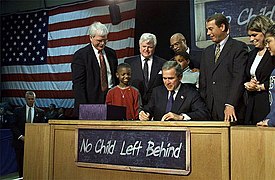
No Child Left Behind Discourages State College Prepardness: Guest Blogger- Go College
This past week, a Boston Globe article revealed the development of an alarming educational trend within the State of Massachusetts. Hidden beneath the surface was yet another subtle demonstration as to why the No Child Left Behind Act may actually be acting as a deterrent to improved educational outcomes.
The issue? It seems that many Massachusetts high school graduates are unprepared for college. In fact, literally thousands of college students are forced to take remedial classes when they begin their college studies. What makes the issue so worrisome for experts is that students who do take remedial classes are far more likely to drop out of college. Statewide Study The issue was far worse for urban school graduates. Roughly 70 percent of students from at least three high schools in Boston and two in Worcester had to take remedial classes upon entering college. One surprising aspect of the study conducted jointly by the state Departments of Elementary and Secondary Education and Higher Education was that the problem was independent of socioeconomic status. In an unusual development for education, many suburban school districts had similar numbers to those of less affluent schools. When it came to the community college network, roughly two-thirds of the 8,500 students enrolling took a remedial course. According to college administrators, that factor is one of the reasons that the drop out rate at the state’s two-year schools is so high.
The MCAS Requirement In discussing that development with the Boston Globe, Robert Gaudet, an education researcher at the University of Massachusetts’ Donahue Institute, offered the following assessment. “The dirty little secret is that MCAS doesn’t test 10th grade skills, much less college skills. Passing is not that hard, it’s getting to proficient that’s tougher.” It is at this point we come to the law known as NCLB and the subsequent definition of the term proficiency. Many would like to see proficiency under NCLB defined as college readiness - in fact the law appears to suggest just such a level. If that were in fact the case, then theoretically the next step would be to raise the test standards so that passing the MCAS meant a student was in fact ready for college level work. But taking such a step would bring one of the major absurdities of the law into play, the demand for 100% proficiency. Raising test standards would guarantee that every Massachusetts High School would fail to make the federal guidelines for Adequate Yearly Progress under the law. Because of that potential development, it is our guess that the test standards will not be raised to such a level. In essence, NCLB, with its extreme punitive structure and absurd goals, will act as a deterrent to taking steps to raise educational standards. Proficiency Versus Basic Skills Instead, those researchers suggest that two options exist - standards can either be minimal, thereby presenting little in the way of challenge to typical students or they can be rigorous and challenging, and ultimately unattainable by below average students. Given that backdrop, it is easy to see the confusion developing. It is precisely the situation the Massachusetts study revealed. The MCAS is a basic skills test, not a college readiness exam, and therefore meaningless in regards to the Massachusetts issue. In fact, that is precisely what one would expect given NCLB’s insidious punitive nature and unrealistic expectations.
In Massachusetts, folks are working hard to raise standards. State education officials unanimously approved a core high school curriculum in November, a recommended program that includes four years of English, four years of math, three years of science, and three years of history. However, it must be noted that not all of our students will be able to handle college level rigor no matter how hard educators work. In spite of that fact, we continue to assume that college-ready is possible for every single student. It is time for America to realize it is not. As we have noted previously, one necessary step in this educational dilemma is to promote a vocational option, a hands-on, less academic approach that focuses on career options. Such a program must be available well before the end of high school, perhaps as early as ninth grade. Unfortunately, such training is thought of as second class in the US while college is thought of as first class. But if the goal is to create students who are ready to be positive contributors to society, then they first must be able to make a good living. We agree. It is a step that other countries have used very successfully. Murray also indicates that far too many people place a premium on a college degree. Yes, many careers/jobs demand such a degree as its qualification. But many more careers are available with two years of specific training. Here in Maine we continue along the opposite path. Our education promos feature slogans such as “College for ME” and “Everyone College Ready”. The goal is noble, trying to ensure that kids have options after high school is a great premise. But such slogans further foster that negative viewpoint of vocational education/training. If we continue to state that going to college is the best answer then there is no option for our kids but to see vocational education/training as second class. Back to Massachusetts Because some additional students will be unable to meet those higher standards, those students will give up on the system. In our eyes, raising educational standards will exacerbate the current drop out problem. Only when raising standards is discussed against a back drop of creating meaningful options for students who cannot handle the academic rigor associated with college level work will we be able to increase expectations without increasing our drop out rates. Despite proponents spin on the law, NCLB fails to address this fundamental dilemma. In fact, it likely prevents school districts from taking the steps to increase standards because increasing standards will only bring about more penalties for schools. And because the law governs the actions of our public schools, we have situations like that of Massachusetts, where 100% proficiency goals get confused with the goal of college readiness, and students are caught in the absurdity of it all.
 Labels: academic preparation, Student Success
posted by The College Puzzle at 5/04/2008
0 comments
|
|
My blog discusses the important and complex subjects of college completion, college success, student risk factors (for failing), college readiness, and academic preparation. I will explore the pieces of the college puzzle that heavily influence, if not determine, college success rates.
States Where It Will Get Harder to get Into College
Last blog I wrote about the new study of high school grads in 2015 featuring the declining states. But there are some states with huge growth where college space will get tight or nonexistent. For examle Arizona growth is projceted to be 50% between 2005 and 2015! Some other states are Fla 22%, Ga 23%, Nevada 49%, NC 20%, Texas and Tenn 21%.
Many of these states barely have capacity for exisitng students-eg AZ, NV, and FLa. In Arizona the only four year public school in the Tuscon metro area is the University of Arizona which is bulging. Fla has communuty colleges converting to 4 years degrees, and has many geographical dense areas with no four year capacity. Increasingly public college opportunity will depend on where you live.-see- http:/www.wiche.org for the projections. And even better high school preparation will be required to get admitted. Labels: academic preparation, College Admissions
posted by The College Puzzle at 4/17/2008
0 comments
|
|
My blog discusses the important and complex subjects of college completion, college success, student risk factors (for failing), college readiness, and academic preparation. I will explore the pieces of the college puzzle that heavily influence, if not determine, college success rates.
College Remediation Rates Are Understated by US Department of Education
The US Department of Education in 2003 released its percentages of entering "freshmen" enrolled in developmental courses, 2000- see NCES 2004-10 report, 2003. These are now the official figures and are widely cited as authoritative source on the incidence of remediation in postsecondary education. The 42% public 2 year rate is way off, and the real number is over 60% as evdenced by another US Department study by Clifford Adelman who used transcripts of a representative sample on college students in his books Answers in the Toolbox and Toolbox Revisited.
A new Ca. study of Community Colleges found more than 70% of students ages 17-19 were placed in remedial math, and 42% in remedial English-twillet@calpass.org. The Us Dept number of 42% is number enrolled in remedial course , not the number who need it. This may account for some of the underestimate, but the department needs a new remediation study and precise concepts to clarify this crucial misperception. Then we need a good cost estimate of all remediation. Labels: academic preparation
posted by The College Puzzle at 4/11/2008
0 comments
|
|
My blog discusses the important and complex subjects of college completion, college success, student risk factors (for failing), college readiness, and academic preparation. I will explore the pieces of the college puzzle that heavily influence, if not determine, college success rates.
Makes Far Behind Females In College Preparation And Completion
Last year females attained 58% of 4year college degrees and males 42%- the ratios for african american and latino females are more than 2 to 1.The causes are unknown and under researched. We have indicators but scant hard evidence. One symptom was released thursday by the National Assessment- NAEP. 41% of the eigth grade girls compared to 20 % of the boys were proficient in writing ! Can this be explained by patterns of instructional interactions between teachers and boys? I doubt it.
One glimmer of a solution was reported by the Chronicle of Higher Education on Oct 17, 2007. Male students who take college courses in high school were more likely to go to college and complete college then other similar male students. Labels: academic preparation, College Completion
posted by The College Puzzle at 4/09/2008
0 comments
|
|
My blog discusses the important and complex subjects of college completion, college success, student risk factors (for failing), college readiness, and academic preparation. I will explore the pieces of the college puzzle that heavily influence, if not determine, college success rates.
Online Tutoring for High School and College Success
There is no question that face-to-face instruction is the best method of teaching. However, students often find themselves needing an extra bit of instruction during odd hours. Online tutoring can provide a convenient, affordable alternative to private tutoring. Though it isn't the perfect environment to receive instruction, it can certainly serve as another piece of the college success puzzle. Some colleges offer an online tutoring program through the school. Tutors are often graduate students, teacher aides or even moonlighting professors. Students should be encouraged to take advantage of any college mentoring or tutoring programs offered by their school. However, there are also several national companies that provide instant online tutoring for a small fee. The following companies offer online tutoring from trained, qualified professionals:
While there are certainly more online tutoring companies springing up all over the Web, the companies above are considered to be reputable and most effective. One thing that online tutors won't do is provide pat answers to questions or complete homework for a student. Instead, the tutors are encouraged to engage with the student and ensure that the student understands everything they cover in a session. Both the affordability and convenience of online tutoring should encourage students to ask for help when they normally wouldn't. For that reason alone, it helps to improve a student's college success rate. By-line: Heather Johnson is a freelance writer, as well as a regular contributor for OEDb, a site for learning about online education. Heather invites your questions, comments and freelancing job inquiries at her email address: heatherjohnson2323@gmail.com . Labels: academic preparation, college sucess
posted by The College Puzzle at 4/02/2008
0 comments
|
|
My blog discusses the important and complex subjects of college completion, college success, student risk factors (for failing), college readiness, and academic preparation. I will explore the pieces of the college puzzle that heavily influence, if not determine, college success rates.
State Scholarships Can Inhibit Challenging Course Taking By Students
College preparation relies in part on students taking the right courses that include content and skills aligned with college completion and persistence. But many state scholarship programs based on grade point averages encourage students to take easy courses where they know that they can get good grades. For example, Kentucky pays a $125 bonus for a 2.50 GPA, but $500 for a 4.o. Sources in Kentucky say this sliding scale incentive pay inhibits students for taking advanced courses with difficult content. Ky weights AP more than other courses, but not much money is involved.
States need to evaluate the impact of GPA incentives in their merit scholarship programs , as well as looking at need more carefully Labels: academic preparation, College Completion
posted by The College Puzzle at 3/17/2008
0 comments
|



2 comments
We are forcing round pegs into square holes. During my 5 years of teaching mostly low level students it is clear to me that most students can perform rigorously but it takes them more time. And they don”t need 4 years of math to succeed in life, especially if they’re not going to college to study math or science or engineering.
You are exactly correct that one of the insidious effects of NCLB is increased disrespect and non-support for the folks (to quote Mike Rowe) who do the dirty jobs that make civilized life possible for the rest of us.
The notion that plumbing, welding, and other blue-collar jobs are just what someone “settles for” when they aren’t “good enough” for college is an insult to all the people who keep the country functioning.
And creating a one-size-fits-all educational system that does not meet their needs only makes them more likely to walk away from educational institutions with even less education than they might otherwise have obtained.
It is not simply that schools need higher standards– it’s that we need a variety of standards that suit the needs, abilities, and career paths that our many and varied students will follow. But under NCLB, schools do not exist to meet the needs of the students– students must be trained to meet the needs of the school.
Leave a Comment