


|
My blog discusses the important and complex subjects of college completion, college success, student risk factors (for failing), college readiness, and academic preparation. I will explore the pieces of the college puzzle that heavily influence, if not determine, college success rates.
Out of School Services Crucial To Student Success, But We Know Little About Interventions
Integrating outside community services
and better teaching could lead to success The on-going struggle to close the glaring gaps in student achievement remains an exercise in frustration. Where student performance is improving, the results are incremental. Where achievement remains low, educators and politicians, parents and students remain highly discouraged. So what’s to be done? Is there a better way to raise poor-performing k-12 students to higher levels? The answer, while promising, must be grounded in caution. While the No Child Left Behind law set standards for student achievement, it is clear that setting education standards alone will not solve the problem. Good schools offering good teaching of good courses in wholesome environments is a good starting point. Such schools tell students they can learn more and individual effort counts a lot. But for too many students, who come from neighborhoods with high concentration of poverty, poor health, insufficient nutrition, unstable homes and crime-ridden neighborhoods, outside forces beyond their control combine to frustrate if not defeat their attempts to get a good education. What is needed is an approach that improves systemic education reform and addresses children’s other needs simultaneously. It is not enough for state and school districts to adopt performance standards and enact standardized tests. Teachers must identify students’ strengths and weaknesses and adapt their teaching methods to address each student. Teachers must undergo effective professional development training to target efforts to each child’s learning difficulties. Fundamental to the success of any worthwhile enterprise is the intelligent allocation and deployment of resources sufficient to achieve the expected results. Too often, however, state and local school finance systems are disconnected from their standards-based reforms and a system of continual instructional improvement. It is one thing to require teachers and students to meet high standards in reading, math and science. It is quite another to provide them with all the tools (computers, text books, up-to-date teacher training and properly-equipped laboratories) so they can perform and meet such requirements. Moreover, if the best-paid, most experienced teachers are concentrated in the schools with high-performing students, and the least-experienced, lowest paid teachers are concentrated in the schools with low-performing students, odds are the low-performers will continue to perform below expectations. The point is many low-performing schools may require more resources and dramatically improved classroom instruction. Problems arise because a school district’s resources are not carefully distributed in ways to do the most good. Even if the policies and practices inside school districts and schools go well, outside influences can work to undermine their best efforts. This is most likely in areas where residents live in fear of crime, have weak parental support, and high unemployment. The hope may lie in connecting outside services for children and families to classroom instruction in a coordinated and interactive manner. This approach is a combination of community schools and school linked services, and is the basis for some cautious optimism for closing the student achievement gap. But we are just beginning to probe how to leverage out of school initiatives to improve school attainment. A period of intense experimentation is needed. For example, which family and children’s interventions are essential, and is a critical mass needed in different local contexts. One experiment to start with is to bring state and local social and health services into or near the schools. The purpose is to co-locate and to integrate services (such as tutoring, nutrition, counseling, medical and dental, adult education, childcare) so they serve to reinforce students and parents in enhancing education. For poor families especially, who often cannot travel to several locations to access various children’s services, combining them in one location at school or in adjacent facilities would be a major step-forward. For many, it may make the difference between seeing a doctor and dentist or not at all. It may mean the chance to have parents help their children with homework, get emergency child care, and afterschool education. Connecting public and non-profit services with schools will require federal, state and local cooperation in an unprecedented way—for all to often these activities operate independently in “silos”, separate and out of touch with one another. No less important will be for educators and teachers to be integrated into such services delivery. Teachers should know how family needs and strengths affect class performance, and be able to adapt their instruction accordingly. If the planning and set-up work for connecting outside services to schools requires some initial new funding, it would make sense to use existing program funds such as Medicaid, children’s protective services, in a new school-linked setting. This would eliminate the need to add, say social workers and nurses, to the school payroll. But all these added services will require more school staff to attract and integrate them within schools. Connecting outside services to schools would also require educators, service providers, political and civic leaders, to park their narrower institutional interests away, and adopt a spirit of collegiality and cooperation. Such a change will require a new definition of professions like education and social work that span several children’s services. The best way to begin connecting outside services to schools is on a trial basis. The federal and state governments could offer planning and start-up grants for districts and communities willing to organize and conduct experiments connecting outside services and communities to schools. Such experiments should be spread around in rural, urban and suburban settings. Various mixes of services and incentives should be tried ranging from the try it all approach of the Harlem Children’s Zone to paternalistic approaches that rely on improved behavior of children and education of parents. Closing the achievement gap will not accelerate or get much better if we continue doing the same things in the same way. A hungry child, a kid with bad teeth, youths with single parents struggling to make ends meet, or who are out of work or fighting addictions cannot be expected to perform as well in school as their counterparts from stable living, and good health and nutrition situations. If school financing were reframed into “children’s financing”, and family services across the spectrum were integrated at or near K-12 education, disadvantaged children would carry fewer handicaps to and inside their schools. This may become a “Rosetta Stone” that enables us to translate low achieving schools into more success. Michael W. Kirst is Professor Emeritus of Education at Stanford University. Prepared with support of the School Finance Redesign Project at the Center for Reinventing Public Education, University of Washington Labels: academic preparation, Student Success
posted by The College Puzzle at 11/17/2008
0 comments
|
|
My blog discusses the important and complex subjects of college completion, college success, student risk factors (for failing), college readiness, and academic preparation. I will explore the pieces of the college puzzle that heavily influence, if not determine, college success rates.
Comprehensive State Policy Guide for Dual Enrollment
Jobs for the Future published "On Ramp to College" which has a fine overview of state policies and barriers to provide high school dual enrollment in college. The 52 pages are filled with good advice and data on state programs that reach nontraditional dual enrollment students. There are specific state examples for each section such as: access, quality, academic support,finance , data, and governance-see www.jff.org
Labels: dual enrollment, Student Success
posted by The College Puzzle at 8/25/2008
0 comments
|
|
My blog discusses the important and complex subjects of college completion, college success, student risk factors (for failing), college readiness, and academic preparation. I will explore the pieces of the college puzzle that heavily influence, if not determine, college success rates.
Conflicting Tests; College Ready, NCLB, Minimum High School Graduation
The latest issue of the Gadfly by Fordham Foundation has an admission from both the Massachusetts State Superintendent and State Board Chair that the passing high school graduation cut score on MCAS is 8th grade level, and is nowhere near college ready. But Mass. is caught in the same vise as other states. If they raise the cut score to college ready level then huge numbers of students will fail to graduate, and many high schools will not make NCLB annual progress.Meanwhile students get an incorrect signal from MCAS that they are prepared for college. This is particularly true for community college students who know there are no entrance requirements.
We need to figure a way out of this bind by having colleges be clear on what is needed for college success and college completion. Colleges need to set cut scores on k-12 tests the way Texas and California State University has done. K-12 cannot solve this misleading testing situation on its own. Labels: College Completion, College Success, Student Success
posted by The College Puzzle at 5/20/2008
0 comments
|
|
My blog discusses the important and complex subjects of college completion, college success, student risk factors (for failing), college readiness, and academic preparation. I will explore the pieces of the college puzzle that heavily influence, if not determine, college success rates.
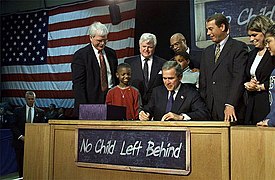
No Child Left Behind Discourages State College Prepardness: Guest Blogger- Go College
This past week, a Boston Globe article revealed the development of an alarming educational trend within the State of Massachusetts. Hidden beneath the surface was yet another subtle demonstration as to why the No Child Left Behind Act may actually be acting as a deterrent to improved educational outcomes.
The issue? It seems that many Massachusetts high school graduates are unprepared for college. In fact, literally thousands of college students are forced to take remedial classes when they begin their college studies. What makes the issue so worrisome for experts is that students who do take remedial classes are far more likely to drop out of college. Statewide Study The issue was far worse for urban school graduates. Roughly 70 percent of students from at least three high schools in Boston and two in Worcester had to take remedial classes upon entering college. One surprising aspect of the study conducted jointly by the state Departments of Elementary and Secondary Education and Higher Education was that the problem was independent of socioeconomic status. In an unusual development for education, many suburban school districts had similar numbers to those of less affluent schools. When it came to the community college network, roughly two-thirds of the 8,500 students enrolling took a remedial course. According to college administrators, that factor is one of the reasons that the drop out rate at the state’s two-year schools is so high.
The MCAS Requirement In discussing that development with the Boston Globe, Robert Gaudet, an education researcher at the University of Massachusetts’ Donahue Institute, offered the following assessment. “The dirty little secret is that MCAS doesn’t test 10th grade skills, much less college skills. Passing is not that hard, it’s getting to proficient that’s tougher.” It is at this point we come to the law known as NCLB and the subsequent definition of the term proficiency. Many would like to see proficiency under NCLB defined as college readiness - in fact the law appears to suggest just such a level. If that were in fact the case, then theoretically the next step would be to raise the test standards so that passing the MCAS meant a student was in fact ready for college level work. But taking such a step would bring one of the major absurdities of the law into play, the demand for 100% proficiency. Raising test standards would guarantee that every Massachusetts High School would fail to make the federal guidelines for Adequate Yearly Progress under the law. Because of that potential development, it is our guess that the test standards will not be raised to such a level. In essence, NCLB, with its extreme punitive structure and absurd goals, will act as a deterrent to taking steps to raise educational standards. Proficiency Versus Basic Skills Instead, those researchers suggest that two options exist - standards can either be minimal, thereby presenting little in the way of challenge to typical students or they can be rigorous and challenging, and ultimately unattainable by below average students. Given that backdrop, it is easy to see the confusion developing. It is precisely the situation the Massachusetts study revealed. The MCAS is a basic skills test, not a college readiness exam, and therefore meaningless in regards to the Massachusetts issue. In fact, that is precisely what one would expect given NCLB’s insidious punitive nature and unrealistic expectations.
In Massachusetts, folks are working hard to raise standards. State education officials unanimously approved a core high school curriculum in November, a recommended program that includes four years of English, four years of math, three years of science, and three years of history. However, it must be noted that not all of our students will be able to handle college level rigor no matter how hard educators work. In spite of that fact, we continue to assume that college-ready is possible for every single student. It is time for America to realize it is not. As we have noted previously, one necessary step in this educational dilemma is to promote a vocational option, a hands-on, less academic approach that focuses on career options. Such a program must be available well before the end of high school, perhaps as early as ninth grade. Unfortunately, such training is thought of as second class in the US while college is thought of as first class. But if the goal is to create students who are ready to be positive contributors to society, then they first must be able to make a good living. We agree. It is a step that other countries have used very successfully. Murray also indicates that far too many people place a premium on a college degree. Yes, many careers/jobs demand such a degree as its qualification. But many more careers are available with two years of specific training. Here in Maine we continue along the opposite path. Our education promos feature slogans such as “College for ME” and “Everyone College Ready”. The goal is noble, trying to ensure that kids have options after high school is a great premise. But such slogans further foster that negative viewpoint of vocational education/training. If we continue to state that going to college is the best answer then there is no option for our kids but to see vocational education/training as second class. Back to Massachusetts Because some additional students will be unable to meet those higher standards, those students will give up on the system. In our eyes, raising educational standards will exacerbate the current drop out problem. Only when raising standards is discussed against a back drop of creating meaningful options for students who cannot handle the academic rigor associated with college level work will we be able to increase expectations without increasing our drop out rates. Despite proponents spin on the law, NCLB fails to address this fundamental dilemma. In fact, it likely prevents school districts from taking the steps to increase standards because increasing standards will only bring about more penalties for schools. And because the law governs the actions of our public schools, we have situations like that of Massachusetts, where 100% proficiency goals get confused with the goal of college readiness, and students are caught in the absurdity of it all.
 Labels: academic preparation, Student Success
posted by The College Puzzle at 5/04/2008
0 comments
|
|
My blog discusses the important and complex subjects of college completion, college success, student risk factors (for failing), college readiness, and academic preparation. I will explore the pieces of the college puzzle that heavily influence, if not determine, college success rates.
Guest blogger Su Jin Gatlin of WestEd highlights the importance of wealth (as differentiated from income) in educational research
Largely due to data limitations, higher education research has focused chiefly on income and less on other socioeconomic proxies, with the specific role of wealth largely left unexplored. Wealth and income are markedly different. Wealth measures the total supply of financial resources available to a family, whereas income only measures the current stream of cash payments. As such, wealth better measures the financial well-being of families – it “signifies the command over financial resources that a family has accumulated over its lifetime along with those resources that have been inherited across generations”.
Wealth’s inclusion in the analysis of postsecondary access would greatly improve the understanding of the college choice process, just as it has enhanced the understanding of academic achievement, and racial inequalities. Research in these areas indicates that when looking at measures of social equality, disparities in wealth are much greater than disparities in income. If wealth and income were strongly correlated, income would be an adequate measure of financial well-being, but they are not. When income stemming from assets is not included when measuring income, the correlation is 0.26. Wealth can provide income (and income may eventually build to wealth), but wealth also has other beneficial characteristics that income does not have. Wealth brings stability. It generally does not change drastically over time in the way that income may. It can be passed on from generation to generation. Unlike income, it is not used for daily expenditures; it is used to “create opportunities, secure desired stature and standard of living, or pass class along to one’s children”. Research indicates that focusing solely on income to measure financial resources ignores the huge gaps in wealth by race. While the income gap between blacks and whites is still very large, the wealth gap is even larger. In 1998, black households earned sixty-two cents for each dollar earned by white households. In comparison, black households held between zero cents to twenty-five cents for each dollar of wealth held by white households. Not only is the wealth gap between blacks and whites distressing, the proportion of black families that are nearly or totally without financial resources is alarming. Approximately 83% of black households did not have enough net financial assets (measured as assets minus debts and equity accumulated in a home or vehicle) to survive at the poverty line for six months without any income, as compared to only 43% of white households. More importantly for studying issues of college access, the disparity in wealth between blacks and whites is present for households with children. Nearly twice as many black children as white children (almost 75% of all black children) grow up in households without any net financial assets. Even more striking, nearly 90% of black children are raised in households without the financial resources to support themselves at the poverty line through three months without income – slightly more than half of white children live in households with similarly dire financial situations. Labels: College Admissions, College Success, income, Student Success, wealth
posted by The College Puzzle at 2/09/2008
0 comments
|
|
My blog discusses the important and complex subjects of college completion, college success, student risk factors (for failing), college readiness, and academic preparation. I will explore the pieces of the college puzzle that heavily influence, if not determine, college success rates.
US Losing Ground In International Comparisons of College Completion
The lates OECD report "Education at A Glance ", 2007 shows the US is now 10th among developed countries in Percent of Adults with an Associate Degree or Higher Ages 25-34. US used to be first. But the news is even worse because large and growing states like California are declining even faster compared to other nations. The US completion rate for all types of college certificates or degrees has been stagnant for decades while other nations are increasing. This will have some negative implications for the US workforce skills in the near future.
The public has not caught on to this issue and continues to focus on k-12 problems. Public opinion ratings for postsecondary education remain high. Nothing much will happen until there is a groundswell of concern. I am surprised that business groups are not more active on this issue beyond their concern with math and science. New policies are needed that feature more than access and focus upon college completion and college success. Prior blogs have plenty of ideas. For the report see www.oecd.org. Labels: College Completion, Student Success
posted by The College Puzzle at 12/11/2007
0 comments
|
|
My blog discusses the important and complex subjects of college completion, college success, student risk factors (for failing), college readiness, and academic preparation. I will explore the pieces of the college puzzle that heavily influence, if not determine, college success rates.
Minority Students Attend Minority Serving Colleges
In 2004 ,38% of minority students attended "minority serving colleges ", but by 2004 this rose 58%. Minority serving includes colleges where minorities make up a large percentage of total students, as well as all minority serving institutions. The historically black colleges have declined as a percent of this minority enrollment, but new minority institutions have grown. This study by the federal government"s NCES provides some insights on the rapidly growing and changing broad access sector of postsecondary education. Selective colleges make up at most 15 to 20 % of enrollment in all colleges.
We know very little about the impact of these enrollment patterns on college success and completion. We do know remediation rates are very high and usually above 60% for community colleges. The broad access sector is crucial to minority college success, and we need a concerted research program to find out more about them. The study is at http://nces.ed.gov/ Labels: College Completion, College Success Studies, Student Success
posted by The College Puzzle at 12/07/2007
0 comments
|
|
My blog discusses the important and complex subjects of college completion, college success, student risk factors (for failing), college readiness, and academic preparation. I will explore the pieces of the college puzzle that heavily influence, if not determine, college success rates.
Guest Blogger Su Jin Gatlin of WestEd: Admission of Low-Income Students at Selective Colleges
A significant amount of attention is focused on the role of race in the college choice process, although recent reports have begun to focus on the access problem that exists for students from low socioeconomic backgrounds, especially with regards to selective colleges. One report found that only about 10% of students at highly selective colleges came from the lowest 40% of the family income distribution. While race receives most of the public’s attention, we need to focus more on the role of income in who attends college.
Compounding the fact that low-income students have largely been ignored in the college admissions process is that they are the ones that benefit most from attending elite universities. These students benefit personally from higher rates of graduation and higher incomes after graduation, and society benefits from decreased dependence on public services and increased diversity in corporate, political, and military leadership. Furthermore, most elite universities, while claiming to desire low SES students, have not been giving any them preferences during the admissions process. Findings like these on the effect of family income on college attendance have been remarkable, further highlighting the vast inequalities in higher education, especially at highly selective universities. Labels: College Admissions, College Success, College Success Studies, ready for college, Student Success, Successful College Student
posted by The College Puzzle at 11/26/2007
0 comments
|
|
My blog discusses the important and complex subjects of college completion, college success, student risk factors (for failing), college readiness, and academic preparation. I will explore the pieces of the college puzzle that heavily influence, if not determine, college success rates.
New Study by California State University on community college completion in California
The Institute for Higher Education Leadership & Policy has released a new publication, Beyond the Open Door: Increasing Student Success in the California Community Colleges. This report is one of two technical reports that describe in more detail the analyses summarized in the policy brief, Rules of the Game, released earlier this year. Following a comprehensive review of the literature to identify probable factors in student success, the report describes analyses of success and completion among California community college students, identifies student characteristics and patterns of enrollment that are related to higher levels of success and
completion, and offers broad outlines of new policy directions aimed at increasing student success. The report includes a qualitative analysis of the system's assessment and placement process. Another Institute report, due for release this fall, contains a comprehensive analysis of community college finance policy and offers suggestions on how state finance policies could be reformed to increase student success. The Executive Summary and the full report (which includes the identical Executive Summary) can be viewed on the Institute's website at <http://www.csus.edu/ihe. Labels: Student Success
posted by The College Puzzle at 9/10/2007
0 comments
|



2 comments
We are forcing round pegs into square holes. During my 5 years of teaching mostly low level students it is clear to me that most students can perform rigorously but it takes them more time. And they don”t need 4 years of math to succeed in life, especially if they’re not going to college to study math or science or engineering.
You are exactly correct that one of the insidious effects of NCLB is increased disrespect and non-support for the folks (to quote Mike Rowe) who do the dirty jobs that make civilized life possible for the rest of us.
The notion that plumbing, welding, and other blue-collar jobs are just what someone “settles for” when they aren’t “good enough” for college is an insult to all the people who keep the country functioning.
And creating a one-size-fits-all educational system that does not meet their needs only makes them more likely to walk away from educational institutions with even less education than they might otherwise have obtained.
It is not simply that schools need higher standards– it’s that we need a variety of standards that suit the needs, abilities, and career paths that our many and varied students will follow. But under NCLB, schools do not exist to meet the needs of the students– students must be trained to meet the needs of the school.
Leave a Comment